

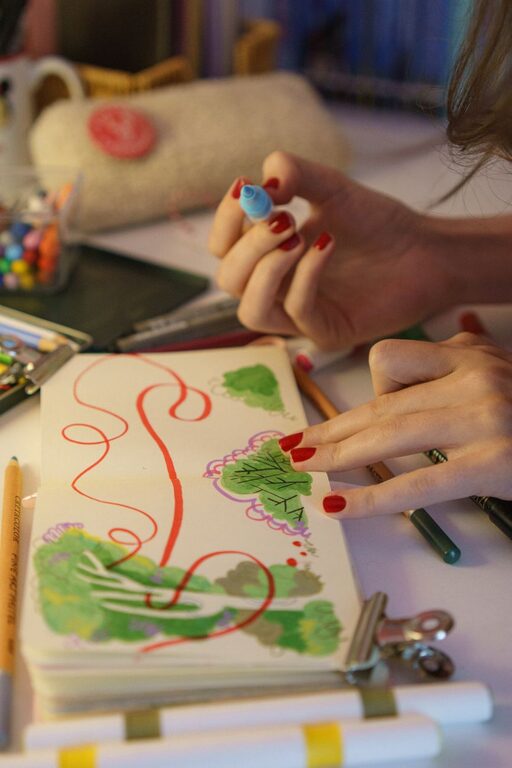
Creativity is often treated like a special talent, but it is also a skill you can practice. You do not need expensive tools, a large block of free time, or a perfect idea to get started. Small creative activities can fit into ordinary moments, such as your morning routine, lunch break, or evening wind-down.
Daily creativity can help you notice details, explore new ideas, and approach familiar tasks from a different angle. The goal is not always to produce something polished. Instead, focus on curiosity, experimentation, and making time for activities that encourage fresh thinking.
Start With Five Minutes
A common reason people avoid creative activities is the belief that they need a large amount of uninterrupted time. In reality, five minutes can be enough to begin.
Set a timer and choose one simple task:
– Write a short description of an object near you.
– Sketch a shape, pattern, or face.
– Take a photo of an interesting detail.
– List unusual uses for a common household item.
– Create a short rhythm by tapping on a table.
– Rearrange a small area of your desk.
Short sessions make creativity feel approachable. They also reduce the pressure to create something impressive. Once you begin, you may naturally continue, but stopping after five minutes still counts as practice.
Keep a Creativity Notebook
A notebook gives your ideas a place to land. It can be a paper notebook, a notes app, or a simple document on your computer. Use it to collect observations, questions, sketches, quotes, and unfinished thoughts.
Try adding one entry each day. Your entry might include:
– Something you noticed
– A question you would like to explore
– A memorable phrase
– A color combination
– A quick drawing
– A possible story idea
– A problem you would like to solve
Do not worry about organizing everything immediately. Creative ideas often become useful later, especially when you give yourself time to connect them.
Use Simple Prompts
If you are not sure what to write, use a prompt. For example:
– What would this room look like in a different season?
– How could I explain this idea to a child?
– What sounds, colors, or textures do I notice right now?
– What would happen if I changed one part of my routine?
– How many different ways can I describe this object?
Prompts remove the pressure of starting with a blank page.
Change Your Routine
Familiar routines are useful, but doing everything the same way can limit what you notice. Make a small change to invite new experiences.
You might:
– Take a different route on a walk.
– Sit in a new spot while reading or working.
– Try a new ingredient in a familiar meal.
– Listen to a different style of music.
– Visit a library, park, or shop you have not explored.
– Use your non-dominant hand for a simple drawing.
The change does not need to be dramatic. Even a small adjustment can help you see ordinary surroundings with more attention.
Practice Looking Closely
Creativity often begins with observation. When you look carefully, you gather details that can inspire ideas.
Choose one everyday object, such as a mug, shoe, plant, or window. Spend a few minutes noticing its shape, texture, color, age, and function. Then describe it without using its name. This exercise encourages you to move beyond automatic assumptions.
You can also try a “small details” walk. Instead of focusing on distance or speed, look for five things you have not noticed before. Pay attention to patterns, shadows, sounds, signs, and changes in the weather.
Make Something With Your Hands
Hands-on activities can make creative practice feel natural and enjoyable. You do not need advanced skills. The process matters more than the result.
Consider trying:
– Folding paper into simple shapes
– Building with blocks
– Making a collage from old magazines
– Decorating a plain notebook
– Arranging flowers or natural objects
– Cooking without following a recipe exactly
– Repairing or customizing an everyday item
Working with physical materials also gives your mind a break from screens. You may find that ideas develop while your hands are occupied.
Give Yourself Creative Limits
Unlimited choices can make it difficult to begin. A few simple limits can provide direction and encourage original thinking.
For example, you could:
– Write a story using 100 words.
– Draw using only three shapes.
– Take photos using one color as your theme.
– Create a meal with five ingredients.
– Make a design using only lines and circles.
– Write a poem without using a certain common word.
Limits encourage you to solve problems within a clear framework. They also make creative exercises easier to repeat.
Turn Everyday Problems Into Challenges
Creativity is not limited to art. It also involves finding useful and thoughtful ways to handle everyday situations.
Choose a small problem and brainstorm several possible solutions before selecting one. For example, you might think about how to organize a crowded drawer, make a morning routine smoother, or remember important tasks.
Aim for at least five ideas, including a few that seem unusual. The first solution is often the most familiar, while later ideas may be more flexible or interesting.
Ask Better Questions
Instead of asking, “How can I finish this faster?” try asking:
– How could I make this simpler?
– What part of this process causes the most difficulty?
– What would I change if I had fewer resources?
– What would a beginner suggest?
– Is there another way to define the problem?
Changing the question can change the possible answers.
Make Room for Play
Play is a valuable part of creativity because it removes some of the pressure to be productive. Choose activities simply because they are enjoyable.
You could complete a puzzle, make up a song, draw silly characters, play a word game, or build something without a specific purpose. Give yourself permission to create imperfectly and change direction.
If you usually judge your work while making it, try separating the creative and editing stages. First, generate ideas freely. Later, decide what to keep, revise, or improve.
Learn From Creative Work
Other people’s work can provide inspiration, techniques, and new perspectives. Read a short story, study a painting, listen closely to a song, or explore a design project.
Rather than copying, ask yourself:
– What captures my attention?
– How was this work structured?
– What choices did the creator make?
– What mood or message does it communicate?
– What technique could I try in my own way?
Keep a small list of work that interests you. Reviewing it can help you recognize patterns in your own preferences.
Build a Sustainable Habit
A creative habit works best when it fits your real life. Choose an activity you enjoy and connect it to an existing routine. For example, write after your morning coffee, sketch during lunch, or take photos during an evening walk.
Keep your supplies easy to reach. A notebook on your desk, a camera app on your phone, or a small box of art materials can reduce the effort required to begin.
Most importantly, measure success by consistency rather than quality. Some days may produce exciting results, while others may only produce a few notes or rough marks. Both types of practice help you stay connected to your creative side.
Creativity grows through regular attention. By making small changes, asking open-ended questions, observing your surroundings, and allowing yourself to experiment, you can make creative thinking a natural part of everyday life.